


A CF7 Mailchimp integration plugin lets businesses automatically send Contact Form 7 submissions to Mailchimp the moment a visitor fills out a form. Contact Form to Any API connects directly with the Mailchimp API without any Zapier integration, middleware, or custom code.
Best CF7 Mailchimp Integration Plugin for WordPress
Many businesses collect newsletter subscribers and marketing leads through Contact Form 7 on WordPress while managing their email campaigns in Mailchimp. Without an automated workflow, teams often manually export and import subscriber data or rely on third-party automation tools that add extra cost and complexity.
Contact Form to API solves this by sending Contact Form 7 submissions directly to Mailchimp through API requests, allowing subscriber data to sync automatically in real time without leaving WordPress. It’s commonly used for newsletter signup forms, lead generation campaigns, webinar registrations, consultation requests, and marketing automation workflows where every submission needs to be added to a Mailchimp audience instantly.
This setup is widely used for email subscription forms, campaign landing pages, gated content forms, promotional offers, and customer onboarding workflows where Contact Form 7 submissions need to be synced with Mailchimp audiences automatically.
Follow the step-by-step guide below to quickly and accurately set up the integration using Contact Form to API.
Watch the Video Tutorial
Prefer a visual walkthrough? Watch this quick YouTube tutorial to see how to connect Contact Form 7 with Mailchimp using Any API, including API key setup, request headers, and field mapping inside WordPress.
👉 Watch the full tutorial here:
Step 1: Log in to Your Mailchimp Account
Start by signing in to your Mailchimp account. You’ll need access to your account settings to generate an API key, which is required to authenticate the connection.
Step 2: Access the Integration Settings in WordPress
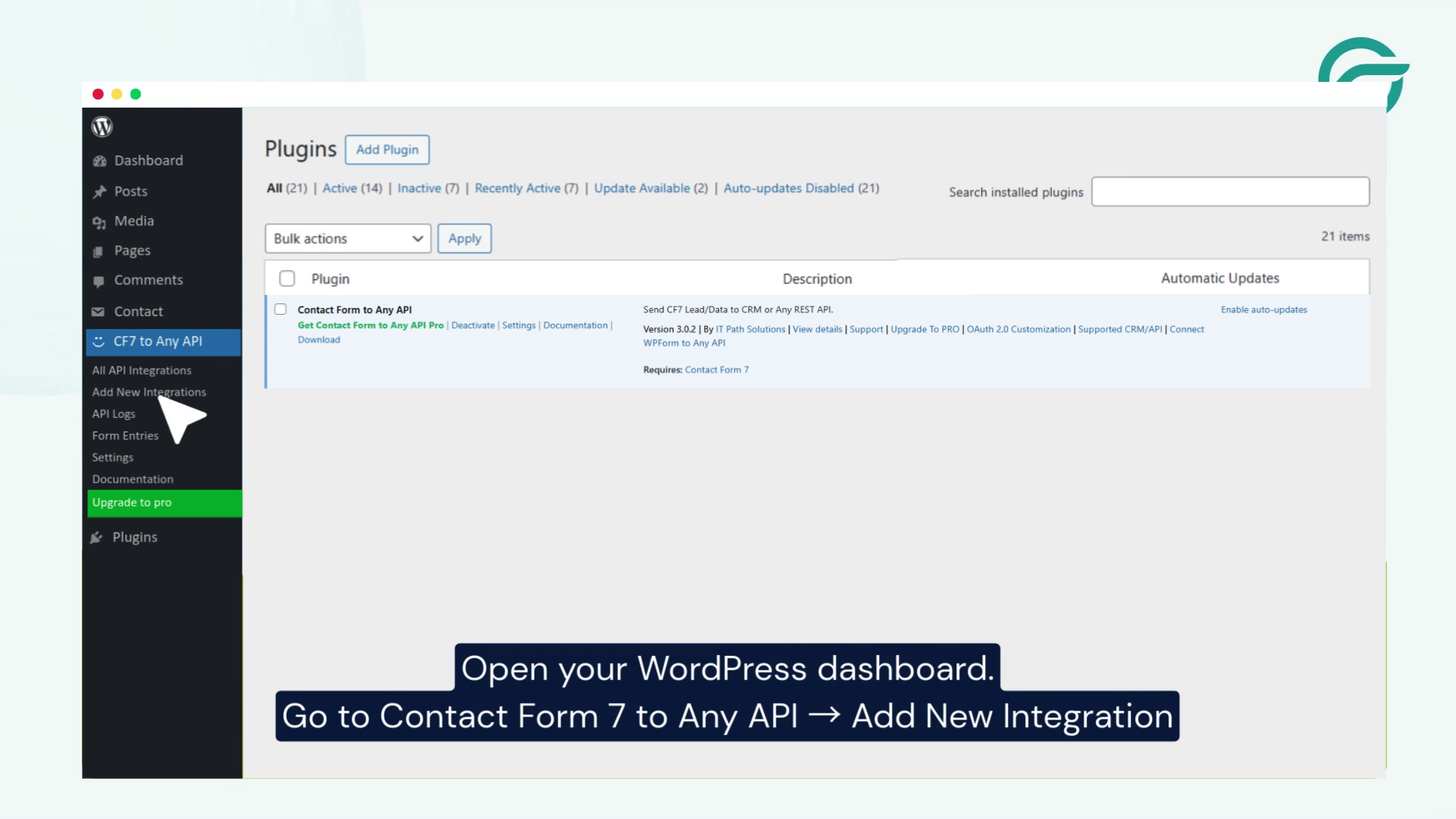
Next, open your WordPress dashboard.
- Navigate to CF7 to Any API
- Click on Add New Integration
This is where you’ll configure the connection between your contact form and Mailchimp.
Step 3: Create a New Mailchimp Integration
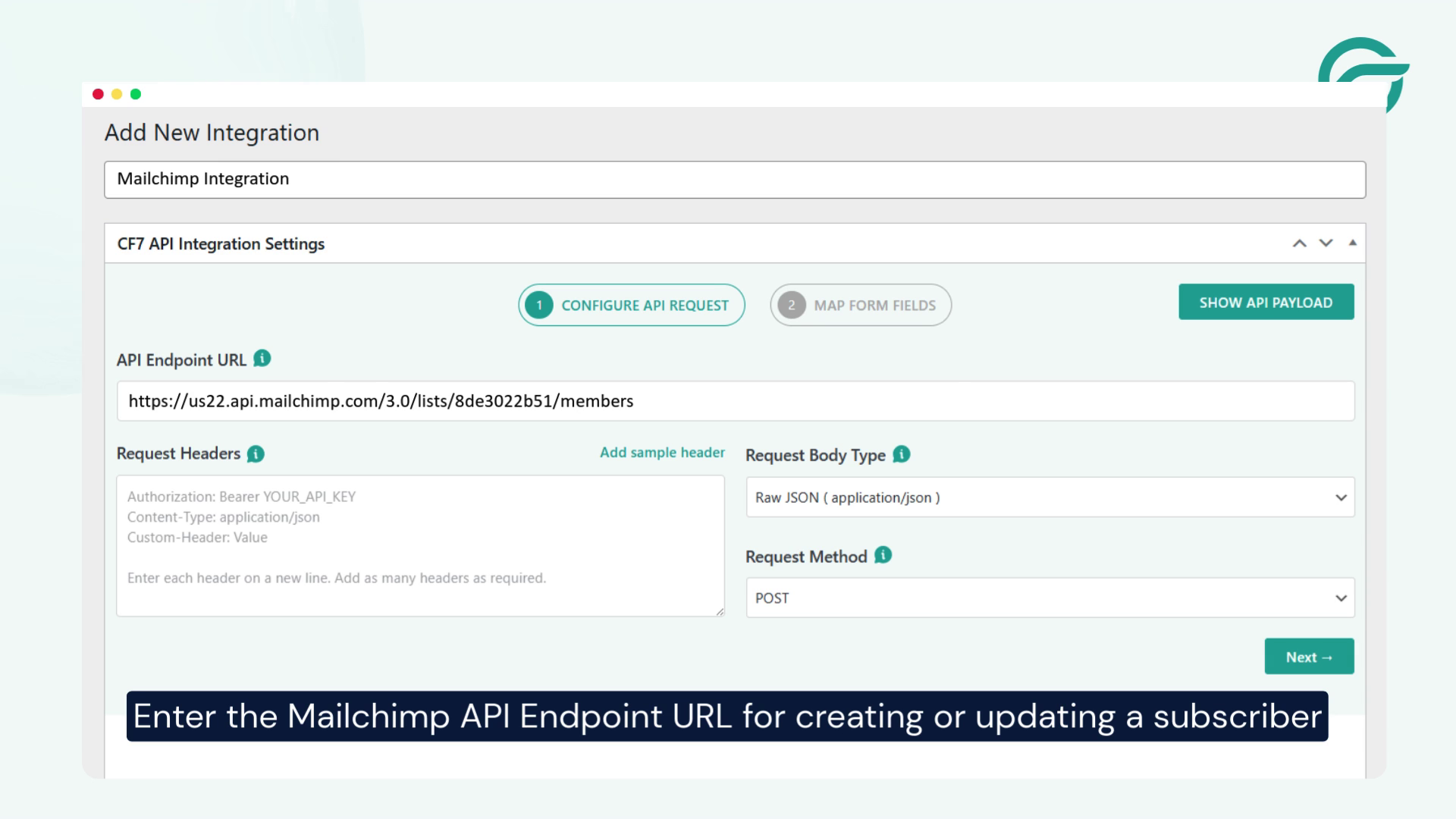
In the integration setup screen:
- Give your integration a clear and descriptive title
(Example: Mailchimp Integration) - Enter the Mailchimp API Endpoint URL used to create or update a subscriber in your audience list
This endpoint ensures that form submissions are sent directly to Mailchimp.
Step 4: Add Mailchimp Authorization Headers
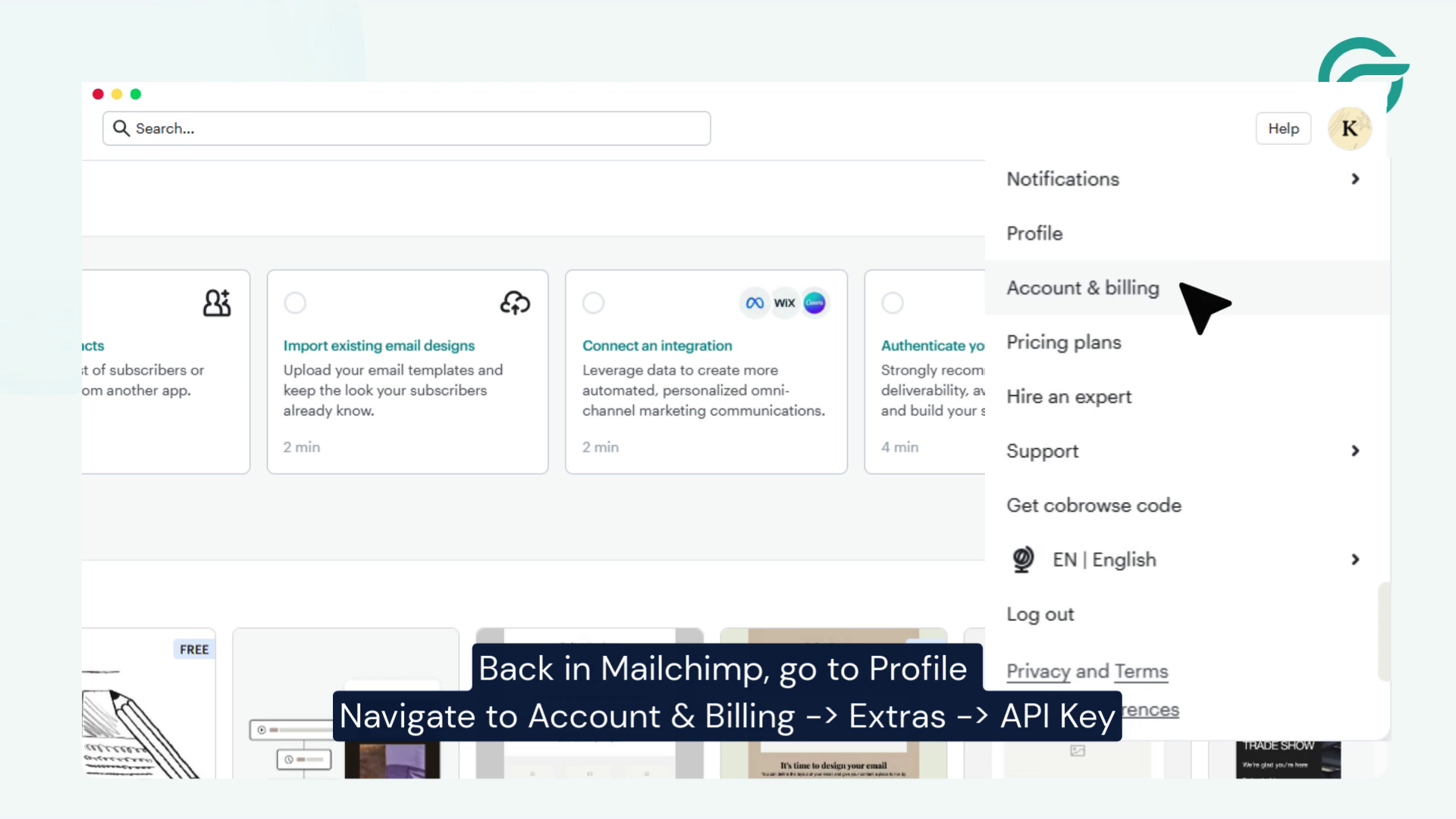
To securely connect with Mailchimp, you need to add request headers.
Generate a Mailchimp API Key
In your Mailchimp account:
- Go to Profile → Account & Billing
- Navigate to Extras → API Keys
- Click Create A Key, give it a name, and copy the Key Value
Configure Request Headers in WordPress
Back in the integration settings, add the following headers:
- Authorization: Your Mailchimp API Key
- Content-Type: application/json
These headers allow WordPress to authenticate and communicate with Mailchimp properly.
Step 5: Select the Contact Form
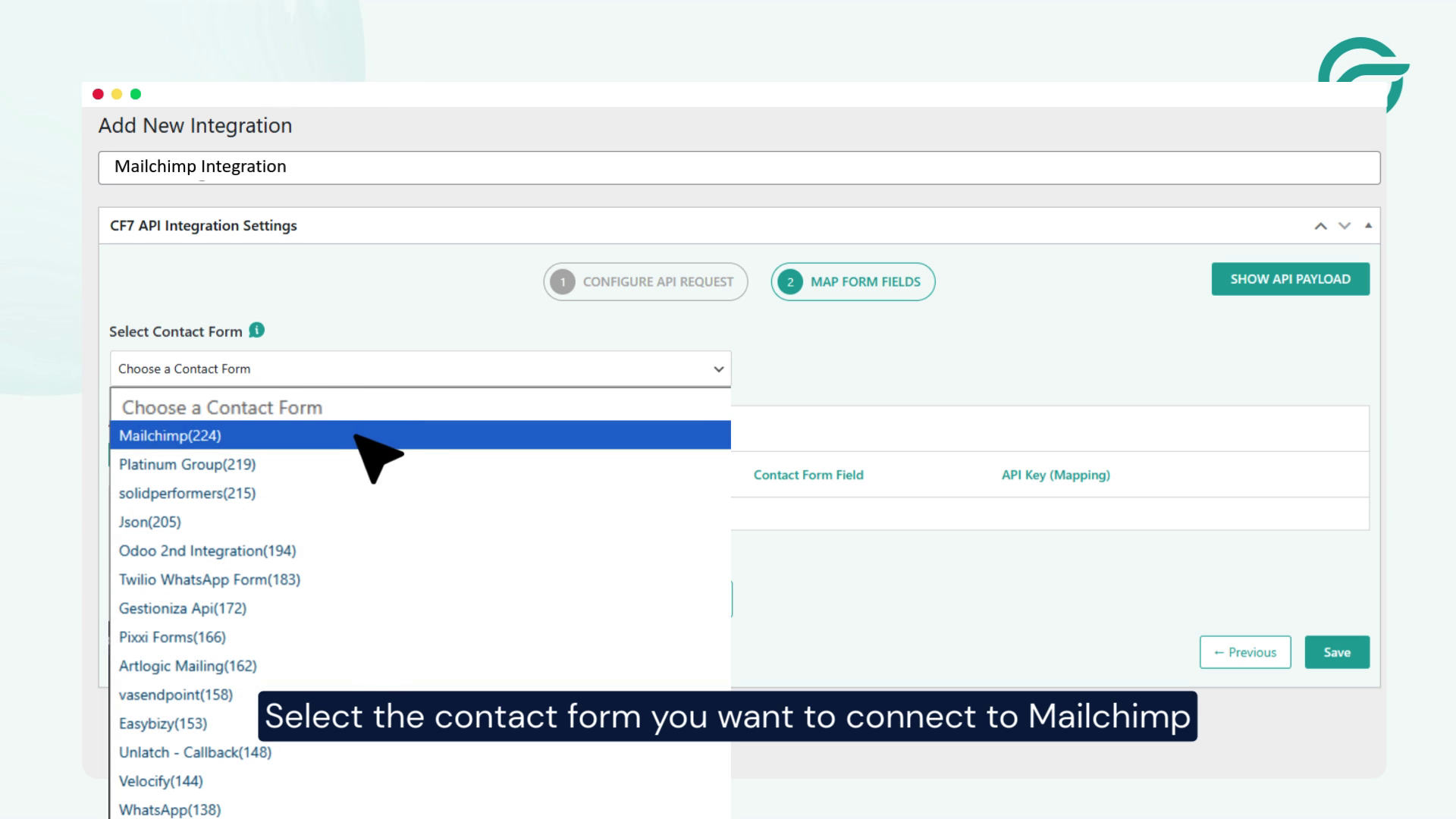
Choose the Contact Form 7 you want to connect with Mailchimp. This ensures that only submissions from the selected form are sent to your Mailchimp audience.
Step 6: Map Mailchimp Fields with Form Fields
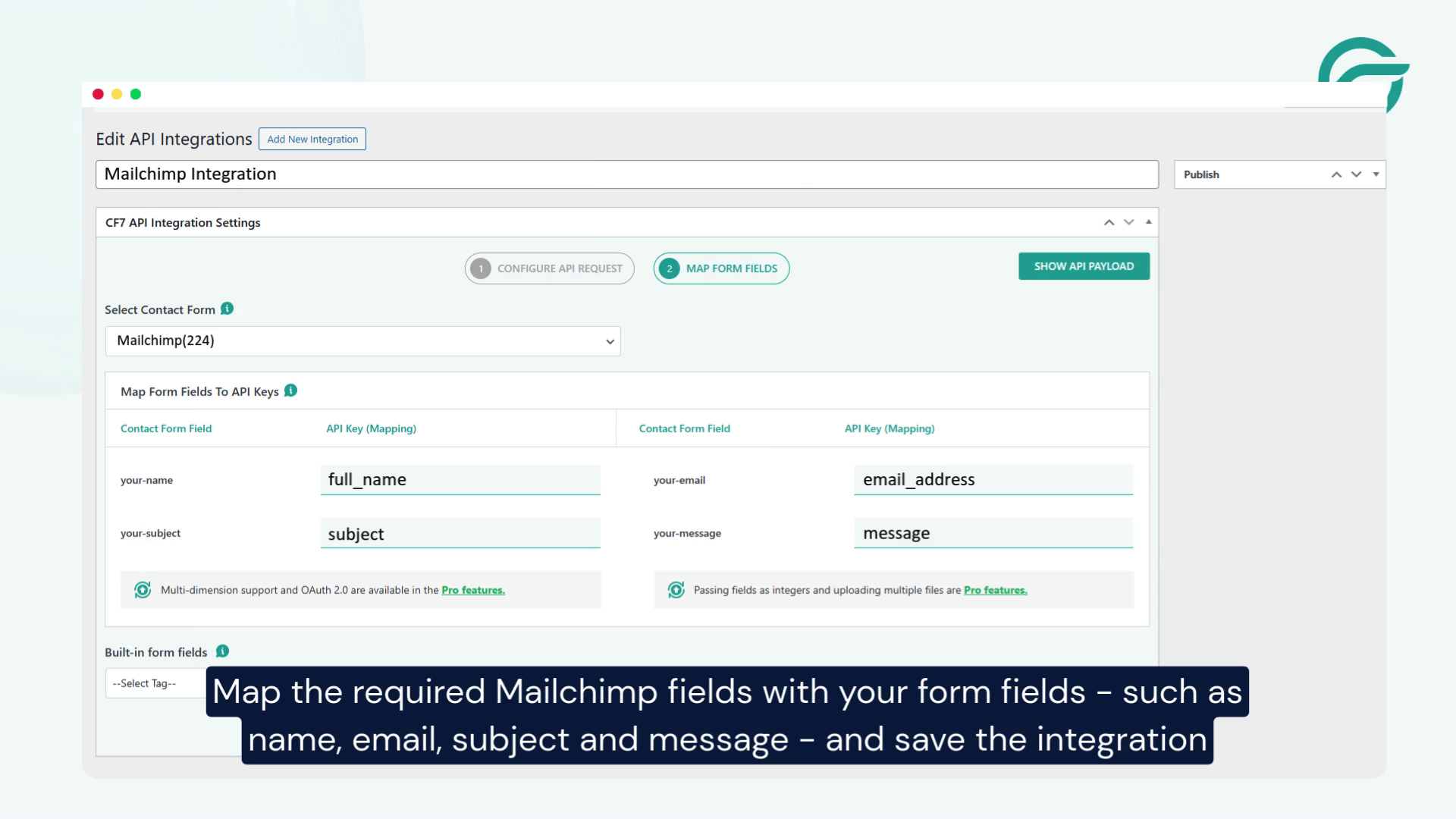
Now, map your form fields to the corresponding Mailchimp fields.
Common field mappings include:
- Email address
- Name
- Subject
- Message
Accurate field mapping ensures that subscriber data is stored correctly in Mailchimp. Once done, save the integration.
Step 7: Test and Verify the Integration
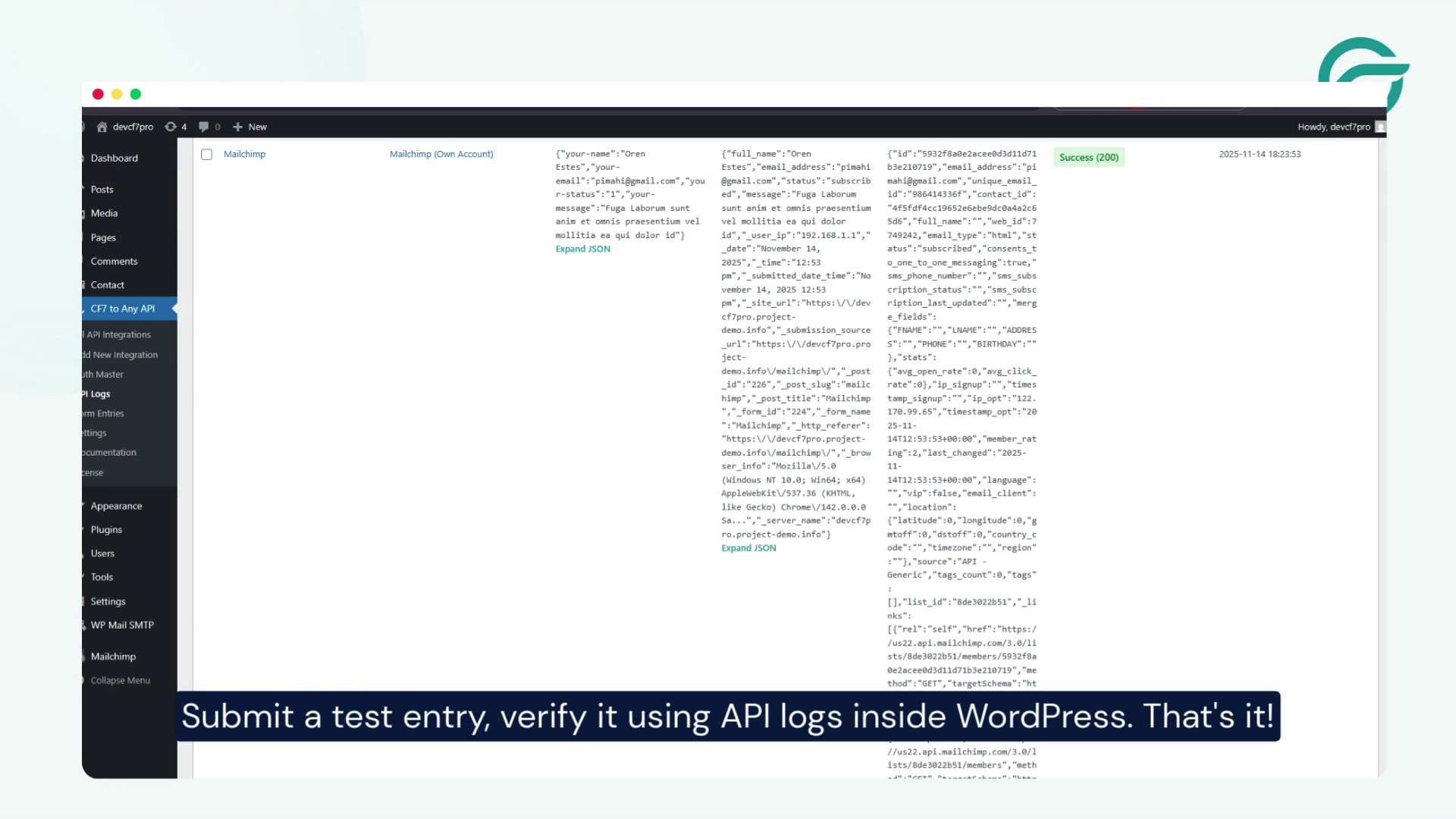
Submit a test entry using your contact form.
Then:
- Check the API logs inside WordPress
- Confirm that the data has been successfully sent to Mailchimp
- Verify the subscriber appears in your Mailchimp audience list
If everything looks good, your integration is complete.
Final Thoughts
Connecting Contact Form 7 to Mailchimp using an API streamlines your email marketing workflow and eliminates manual data entry. With proper field mapping and testing, you can ensure reliable subscriber syncing every time a form is submitted.